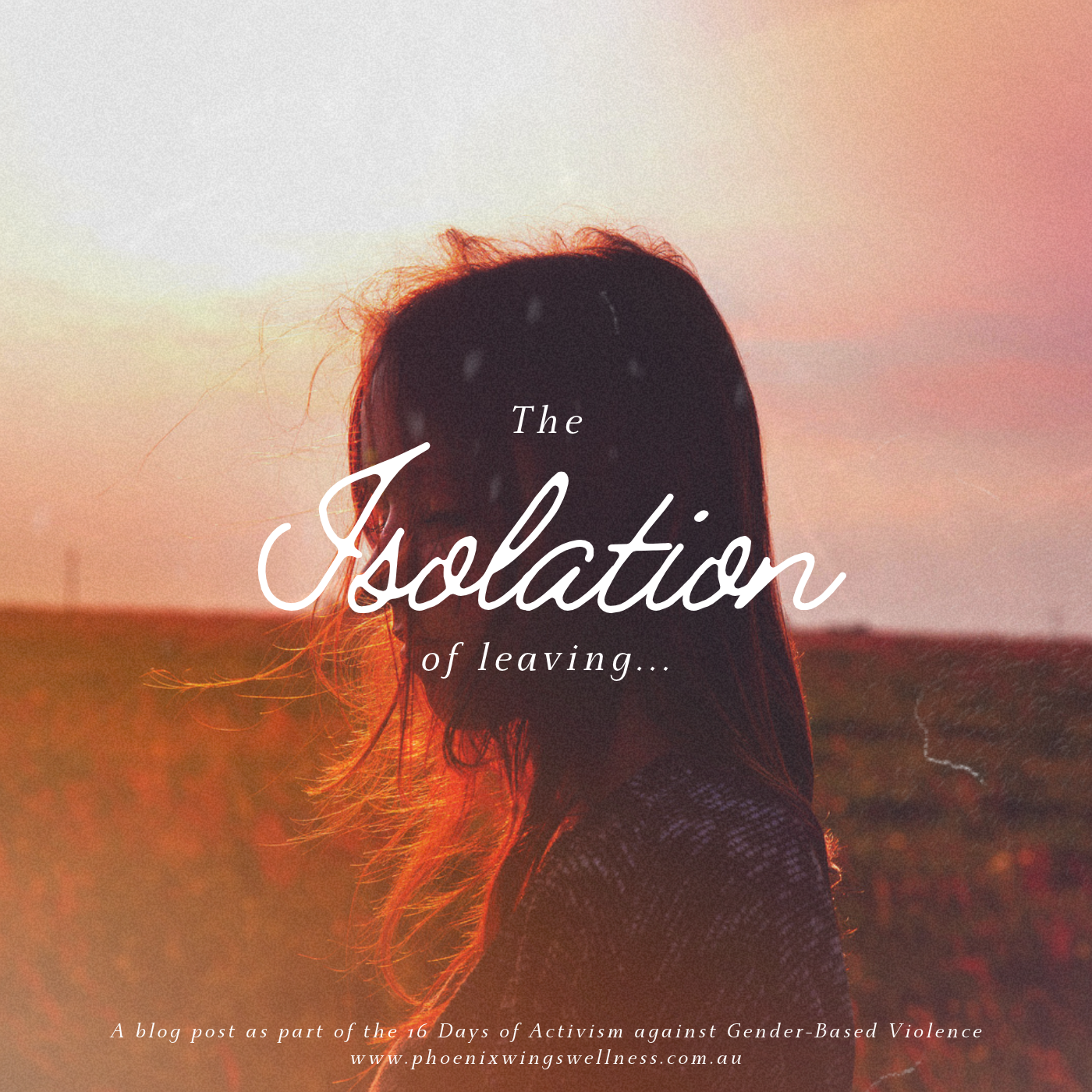
The isolation of leaving
Content note: this piece talks about the emotional aftermath of leaving an abusive relationship, including isolation and self-doubt.
If this brings anything up for you, support is available.
1800RESPECT (national): 1800 737 732
NSW Domestic Violence Line: 1800 65 64 63
Safe Steps (Victoria): 1800 015 188
Lifeline: 13 11 14
In an emergency, call 000.
No one tells you how isolating it actually is when you walk away from a relationship that has taken so much from you.
The conflict may end, but the battle inside your mind is often only beginning.
The thoughts. The doubt. The little voice inside your head questioning your decisions, telling you that perhaps you were being dramatic, that maybe things weren't as bad as you remember, that somehow you could have done things differently.
Even when you know deep down why you made the choices you did, there are moments when you question everything.
People drift away. Conversations become quieter. Some don't want to get involved, while others simply don't understand. And sometimes the loneliness comes not from being alone, but from feeling that the people around you no longer understand what you're carrying.
There is a particular kind of isolation that comes with rebuilding your life while still trying to make sense of everything you've experienced.
But somewhere deep inside, there is a little voice telling you to stand strong.
Hold your ground.
You remind yourself that healing takes time. That not every decision needs to be understood by everyone else. That choosing peace doesn't mean you haven't cared, and walking away doesn't mean you haven't tried.
It's not forever.
It's just for now.
For now, you are learning to find yourself again.
Learning to feel safe in your own thoughts.
Learning to trust your instincts and find comfort in the quiet.
And for now, that has to be enough.
Charlotte (pseudonym)
Why we're sharing this
We're sharing this piece as part of the 16 Days of Activism against Gender-Based Violence. It runs from 25 November to 10 December 2026, and this year's theme is about ensuring justice, protecting survivors, and ending impunity. Stories like this one remind us that leaving is often just the beginning, and that the people walking this path deserve to be believed, understood and supported. Thank you to Charlotte for trusting us with her words. If you'd like to learn more about the 16 Days and how you can get involved, visit UN Women's 16 Days of Activism page and DSS 16 Days of Activism 2026 (Australia).